
Home » ITIL
Category Archives: ITIL
ITIL5 Transformation module released
In mid-April, the latest ITIL5 update was released, including the “Transformation,” “AI Management,” and “Strategy” modules. I’ll begin with a brief overview of the “Transformation” module, which is a new addition to the ITIL module lineup. There were no direct equivalents in the previous version.
This module presents concepts for transforming an enterprise to provide digital services. It emphasizes a comprehensive, multidimensional approach that considers both external and internal enterprise factors, demand, technology, and much more.
The “Transformation” module presents templates for implementing management during transformation, supporting ongoing operations during transformation, managing major changes, supporting employees and stimulating transformation, and, of course, the role of AI.
The module offers standard tools, methods, and techniques, and, as usual, links them to ITIL domains (dimensions), practices, and guiding principles.
ITIL(r) 5 Product, Service, Experience modules released
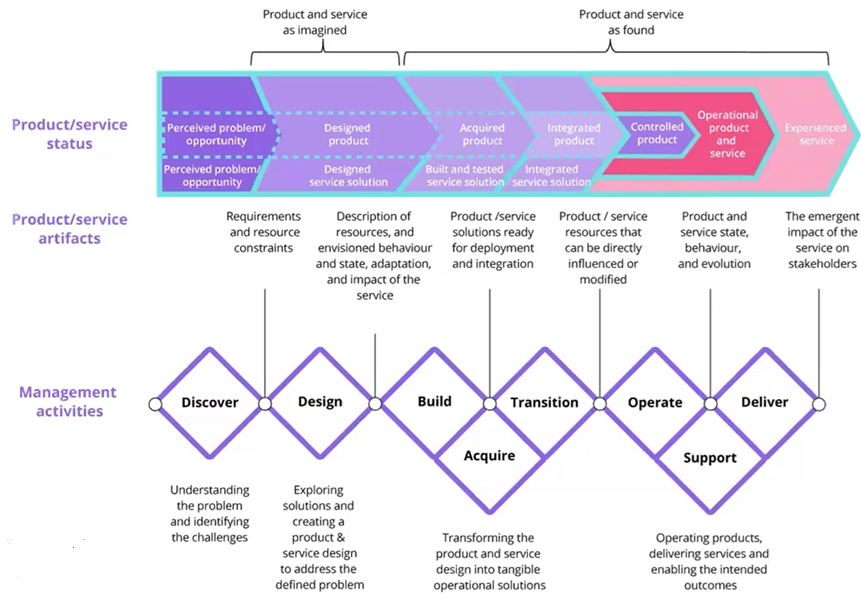
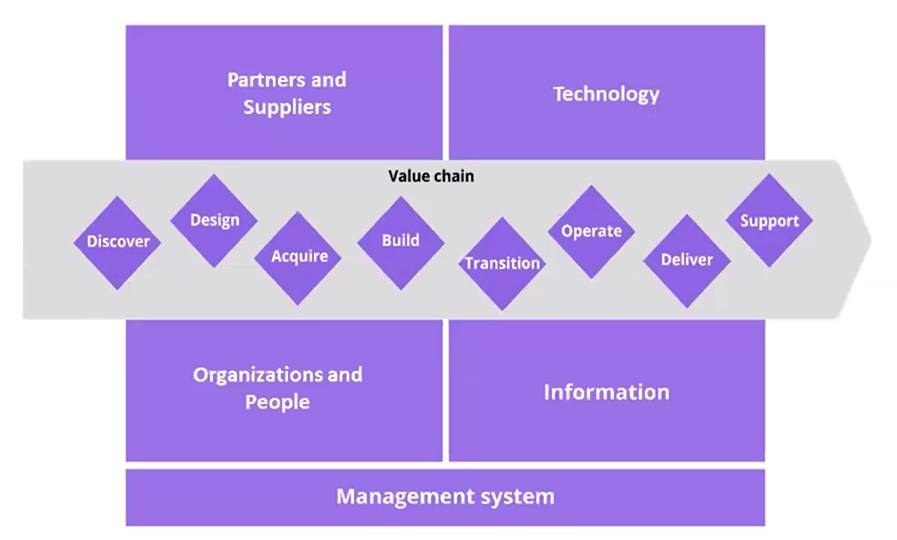
Axelos/Peoplecert announced the official release of these 3 modules on March, 12th. All modules and appropriate exams are available now, focusing on synchronizing product and service lifecycle in Experienced value delivery.
Fig. 1 Combined Product and Service Value chain –
Operational model canvas –
Our Service Desk course received “The Highest Rated” status
Our Service Operations & Service Desk management online course received “The Highest Rated” status by Udemy.

AI module in IT Service management online course
Our course IT Service management has a new module now – AI in ITSM.
Learn which roles can AI play in ITSM – boring and generative. We discuss risks, achievements, challenges and advantages of applying AI for IT service management.
Join or Retake our course NOW!

AI applying for Service Desk
Our online course – Service operations and Service Desk – got a new module – AI in Service Desk.
Join our course here.

AI Unlocked for Business
AXELOS/Peoplecert issued the online course on AI Business implementation, with clear segmentation, recommendations, risks, challenges and ethical considerations.

Join our courses, purchase services for better experience!


Service Desk Predictors (Leading indicators)
Service desk predictors (or leading indicators) module is added to our Service Desk KPIs e-learning course. In this module you learn how to develop and measure subjective predictors which help us to predict ad solve issues before they happen, and thus reach high KPIs.


ITSM vs DevOps e-learning course is improved with adding Scrum for Operations module
Our ITSM and DevOps e-learning course is amended with a new ScrumOps module! We develop and improve our course instantly to follow the best world practices.

XLA structure
XLA stands for eXtended Level Agreement in which a service provider and a customer agree on in-depth collaboration rather than on formal metrics.
Marc Smalley offered a simple and clear structure for XLA as shown on the image


