Home » 2026
Yearly Archives: 2026
Applying for PMP – experience clarification
PMI does not ask for documents when you apply. The PMP application is self-reported. For each project, describe the dates, your role, and what you delivered.Verification only happens if PMI selects your application for a random audit. In that case, you need one signed confirmation per project from a supervisor, sponsor, or colleague who was familiar with the work.
PMI counts project leadership experience from the last 10 years before you submit.PMI’s current requirement says 10. That is good news for career changers and returners, because the window has gotten wider. It also draws a hard line. Work older than 10 years builds your skills and your story, but it doesn’t count toward the application.The thresholds inside that window:→ 36 months of experience leading projects with a four-year degree → 60 months with a high school diploma or associate degree → 24 months with a degree from a GAC-accredited program → Plus 35 contact hours of PM training in every path. An active CAPM covers that training requirement.
Larger projects are NOT riskier
Is Complexity Theory Right that Bigger Is Riskier? Evidence from Information Technology
Ajazi, Nickelsen, Schmidt, Flyvbjerg & Christodoulou
Overview
Conventional project management wisdom assumes that larger IT projects are inherently more risky because they involve greater complexity, more stakeholders, and stronger interdependencies. This study challenges that assumption using one of the world’s largest empirical datasets of completed IT projects.
The authors analyzed 5,094 IT projects (cost performance) and 831 projects (schedule performance) from 64 countries, covering software development, ERP, BI, cybersecurity, and other IT initiatives. Their conclusion is striking:
Project size is not a reliable predictor of project risk. In fact, the smallest IT projects exhibit the highest cost risk, while schedule risk shows no consistent increase with project size.
Research Objectives
The study tested two widely accepted hypotheses:
- H1: Larger IT projects experience greater cost overruns.
- H2: Larger IT projects experience greater schedule overruns.
Project size was measured by the approved project budget at the Final Investment Decision (FID), while project risk was measured by:
- Cost overrun (Actual Cost / Estimated Cost)
- Schedule overrun (Actual Duration / Planned Duration)
Key Findings
1. Smaller Projects Are Not Safer
Contrary to conventional belief, very small projects demonstrate the highest average cost overruns.
| Project Size | Average Cost Overrun |
|---|---|
| Very Small | 192% |
| Small | 53% |
| Medium | 42% |
| Large | 42% |
| Very Large | 57% |
The statistical analysis found no evidence that increasing project size leads to higher cost risk. Instead, the smallest projects performed significantly worse than all other groups.
2. Schedule Overruns Do Not Increase with Project Size
The analysis of schedule performance also rejected the traditional assumption that larger projects are more likely to finish late.
| Project Size | Average Schedule Overrun | Projects with >50% Delay |
|---|---|---|
| Very Small | 37% | 20.4% |
| Small | 30% | 21.7% |
| Medium | 75% | 43.4% |
| Large | 67% | 44.0% |
| Very Large | 26% | 33.1% |
Although medium and large projects showed higher average delays, statistical testing found no consistent upward trend between project size and schedule risk. Very large projects actually demonstrated the lowest average schedule overrun.
3. IT Project Risk Has “Fat Tails”
A major contribution of the paper is confirming that IT project overruns follow fat-tailed (power-law) distributions.
This means that:
- extreme overruns are not rare exceptions;
- catastrophic outcomes occur much more frequently than predicted by traditional risk models;
- conventional approaches based on normal distributions systematically underestimate project risk.
Importantly, this characteristic applies to projects of every size, although it is strongest among the smallest projects.
Why Are Small Projects More Risky?
The authors suggest several explanations:
- Small projects often receive less executive attention and governance.
- Organizations frequently assign less experienced teams to smaller initiatives.
- Risk management processes are typically less rigorous for projects below predefined budget thresholds.
- Cognitive biases (such as the Dunning–Kruger Effect and Uniqueness Bias) contribute to underestimating project complexity and organizational capability.
Practical Implications
The findings challenge several common project management practices:
- Budget should not be used as the primary indicator of project risk.
- Small IT projects require the same level of governance and risk assessment as larger initiatives.
- Organizations should evaluate project risk based on team capability, organizational maturity, technical complexity, and uncertainty, rather than project size alone.
- Risk management frameworks should explicitly account for fat-tailed risks, recognizing that extreme overruns are an inherent characteristic of IT projects rather than statistical anomalies.
Conclusions
The study fundamentally challenges the long-standing assumption that “bigger means riskier” in IT project management. Instead, it demonstrates that all IT projects carry substantial risk, while small projects are often the most vulnerable to severe cost overruns.
For practitioners, the key lesson is clear: project governance should be driven by risk characteristics rather than budget size. Organizations that automatically devote greater oversight only to large projects may inadvertently overlook the projects most likely to fail.
Original article
ITIL5 Transformation module released
In mid-April, the latest ITIL5 update was released, including the “Transformation,” “AI Management,” and “Strategy” modules. I’ll begin with a brief overview of the “Transformation” module, which is a new addition to the ITIL module lineup. There were no direct equivalents in the previous version.
This module presents concepts for transforming an enterprise to provide digital services. It emphasizes a comprehensive, multidimensional approach that considers both external and internal enterprise factors, demand, technology, and much more.
The “Transformation” module presents templates for implementing management during transformation, supporting ongoing operations during transformation, managing major changes, supporting employees and stimulating transformation, and, of course, the role of AI.
The module offers standard tools, methods, and techniques, and, as usual, links them to ITIL domains (dimensions), practices, and guiding principles.
ITIL(r) 5 Product, Service, Experience modules released
Axelos/Peoplecert announced the official release of these 3 modules on March, 12th. All modules and appropriate exams are available now, focusing on synchronizing product and service lifecycle in Experienced value delivery.
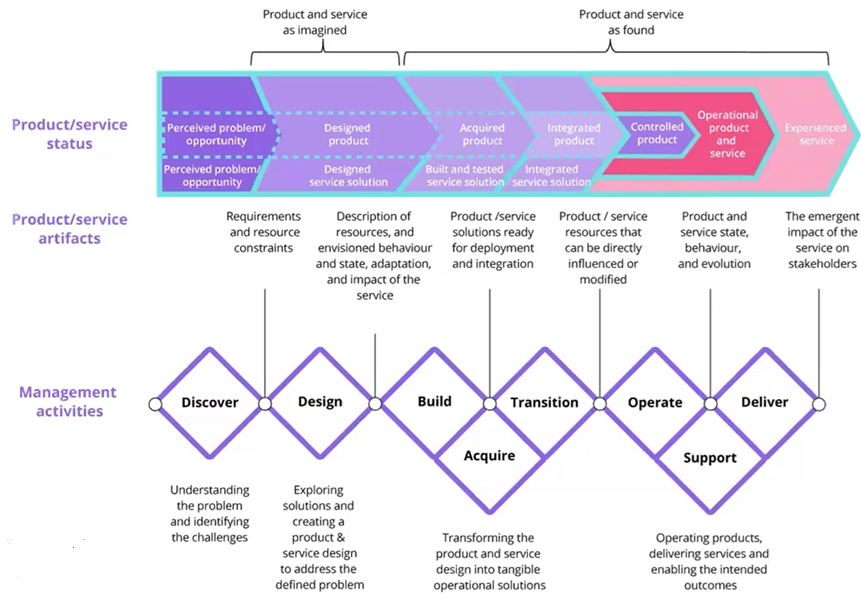
Fig. 1 Combined Product and Service Value chain –
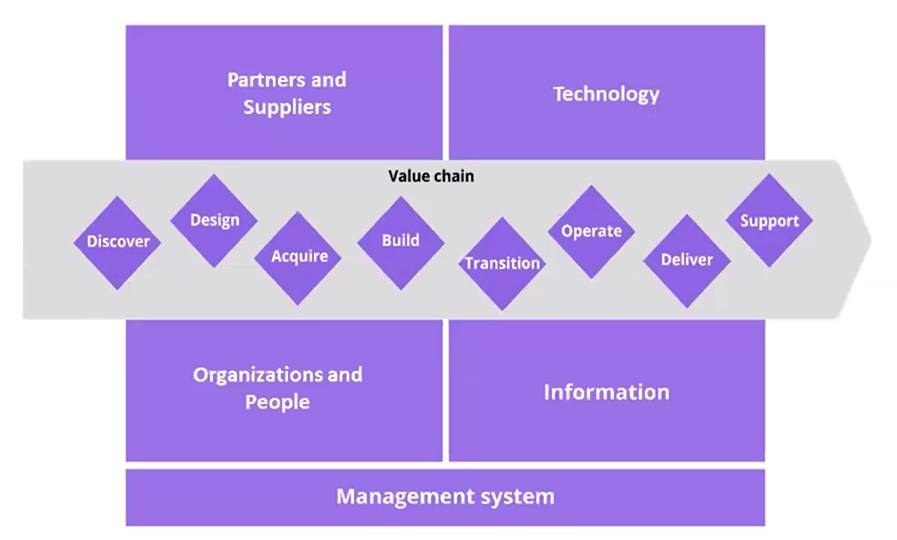
Operational model canvas –
ITIL(r) 5 modules release
ITIL(r) 5 modules Product, Service, and Experience release is announced on March, 12th.
Practical AI implementation in Project management
Practice in AI implementation in project management activities. Learn now!
Only 3 days till 26th February! Learn by doing for $9.99 only – AI assistants and agents for each project stage – from Initiation till Clodure.
More than 10 practical cases with demo following your own practical activities.

Our Service Desk course received “The Highest Rated” status
Our Service Operations & Service Desk management online course received “The Highest Rated” status by Udemy.